DesignedtoComeApart:DesignforDisassemblyandtheFutureofCircularFurniture
undefined NaN, NaN
Design for Disassembly and the Future of Circular Furniture
What if the end of a product’s life was considered at the very beginning of its design?
In conventional product design, much of the attention goes into bringing materials, components, and functions together to create a finished object. But products change over time. A chair wears out, an office evolves, or a furniture system no longer meets its users’ needs.
What determines whether these products can be repaired, adapted, or given a second life?
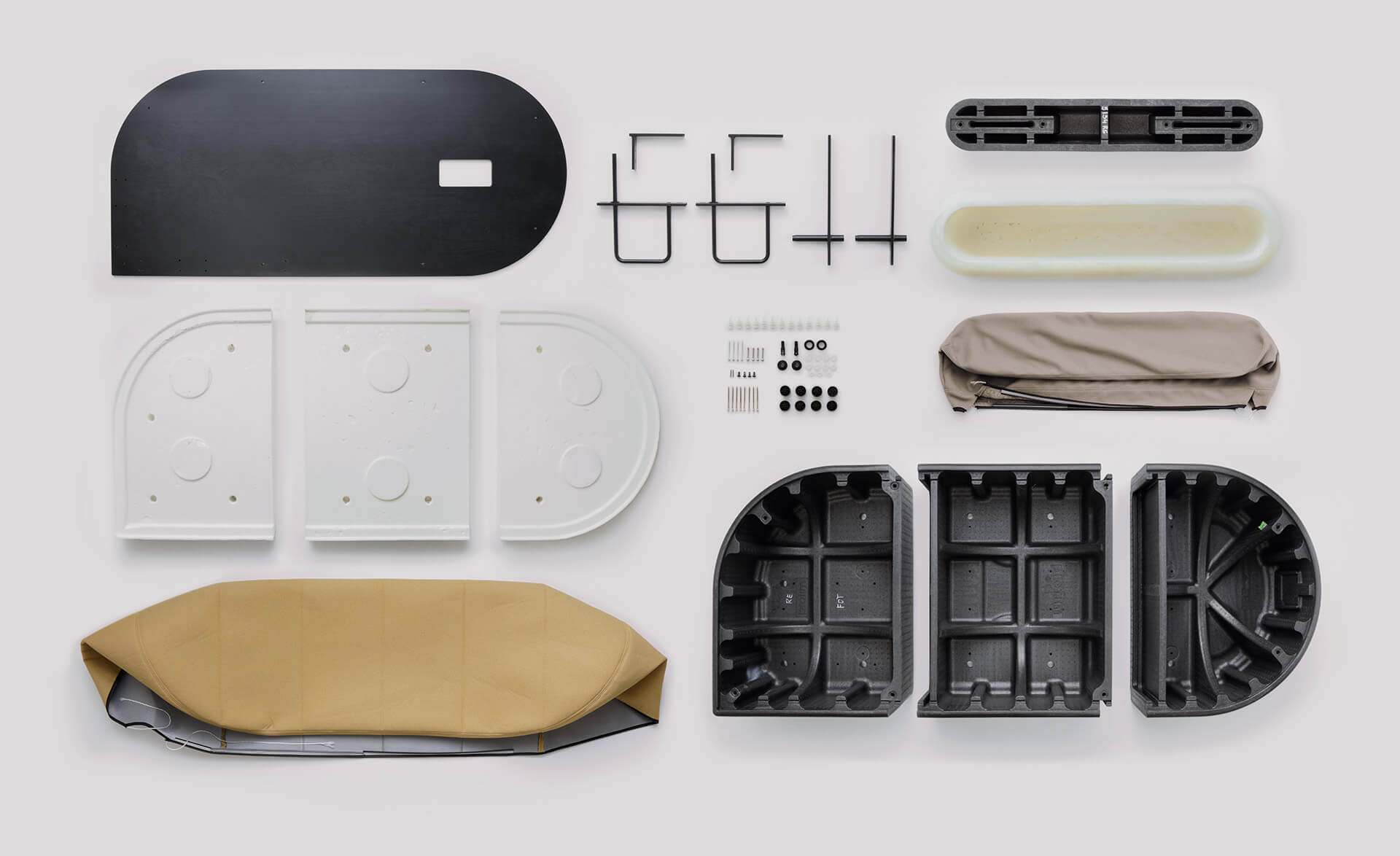
Often, the answer lies in decisions made during the design process. Design for Disassembly (DfD) is an approach that considers how a product can be taken apart as deliberately as it was assembled. Rather than treating disassembly as an afterthought, it makes separation, repair, and material recovery part of the original design strategy.
1. Designing Beyond Assembly
A product can be easy to assemble yet difficult to take apart. Adhesives, inaccessible fasteners, and inseparable material combinations can make repair or material recovery unnecessarily complicated. DfD challenges designers to consider both sides of the process. Can a damaged component be replaced without destroying the surrounding structure? Can different materials be separated? Can the product be dismantled without losing the value of its individual parts? The goal is not simply to make products detachable, but to make disassembly practical and appropriate for their intended future.
2. The Importance of Connections
In furniture design, circularity can begin with a seemingly small decision: how two components are connected. Accessible joints, mechanical fasteners, and replaceable components can make maintenance and repair easier. A chair with a replaceable leg or removable upholstery may remain useful long after one of its components has worn out. However, no single connection method is always best. The right solution depends on structural performance, durability, manufacturing requirements, and the product’s intended lifespan. Good disassembly design considers not only how components are connected, but also when and how those connections may need to be released.
3. From Products to Systems
Furniture often consists of components with different functions and lifespans. In an office chair, for example, the castors, mechanism, upholstery, and structural frame may require attention at different times. If these elements can be accessed and replaced independently, the failure of one component does not necessarily mean the end of the entire product. The same principle applies to desks, shelving systems, and modular workstations. Individual parts can be renewed, configurations adapted, and useful structural elements retained. This shifts the design objective from creating a finished object to creating a system of components that can be maintained and adapted over time.
4. Designing for the Next Life
Disassembly alone does not guarantee circularity. Separated components may still be difficult to reuse or recycle if materials are mixed, parts are damaged, or recovery systems are unavailable. DfD therefore works best alongside other circular design strategies, including durability, repairability, modularity, and responsible material selection. Designers should ask not only whether a product can be taken apart, but also what happens afterward. Can its components be reused? Can worn parts be replaced? Can materials be recovered through appropriate processes? These questions connect product design to the wider systems of manufacturing, maintenance, and material recovery.
5. Rethinking Product Lifecycles
For furniture manufacturers, Design for Disassembly can also create opportunities beyond the product itself. Repair services, refurbishment, replacement parts, and take-back systems can help preserve product and material value. Achieving this requires coordination between design, manufacturing, logistics, and recovery. A detachable component becomes truly valuable when there is a practical way to identify it, remove it, and give it another purpose. Circular design therefore asks us to look beyond the moment a product is sold and consider the different ways its value can be preserved throughout its life. Design has always been about bringing things together. Design for Disassembly reminds us that knowing how to separate them can be just as important. A well-designed product does not necessarily have to remain unchanged forever. It should be able to evolve, be repaired, and serve new purposes.
Sometimes, a better-designed product is not one that can never be taken apart, but one that was thoughtfully designed to come apart when the time is right.
What do you think about DFD? We'd love to hear your perspective at bloosh.studio@gmail.com.